Art, Vision, and a Conversation America Keeps Avoiding
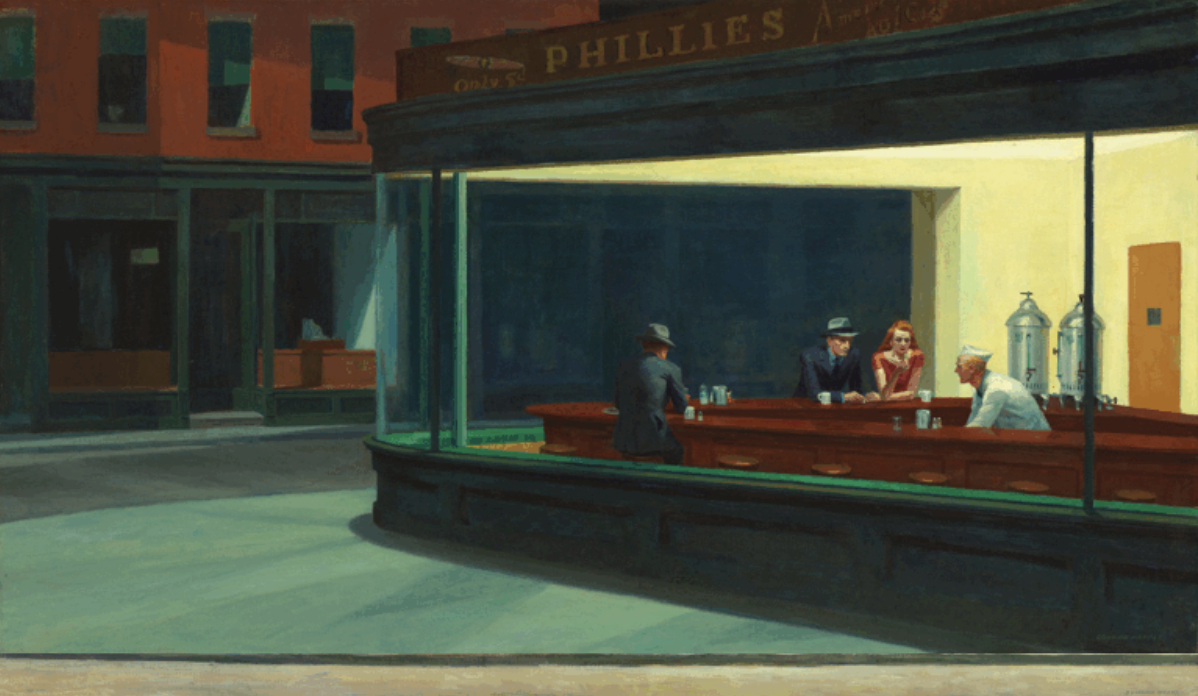
Nighthawks by Edward Hopper via The Art Institute of Chicago
I can picture myself at the Whitney, a few years ago now, standing in front of an Edward Hopper painting. I didn't have any preconceived notions about what I would feel, but I walked in curious and ready to explore. As I studied the lines, the colors, the shadows, and took a step back to take in that familiar Hopper-esque mood of introspective sadness, I noticed how present I had become. And how open.
It has since made me think about what becomes possible when we're that open. Not just in a gallery, but anywhere. What conversations could happen in that mental state — that rare condition of genuine curiosity, without defense or agenda? Because the conversations we really need to have right now, as a country, as a society, are going to require it… A different kind of openness than we've been able to find.
The openness to talk about our vision.
What is the country and society we want to live in? What does it look like, feel like? What are the values of that country, that state, that city, that neighborhood? These aren't political questions — they're human ones. And we've been so busy arguing about policies and ideologies that we've skipped the deeper conversation entirely. Vision comes before strategy. Feeling comes before action. We've had it backwards.
Over sixty years ago, one of the greatest visionaries in history painted a picture for us — of children holding hands, a table of brotherhood, justice rolling down like waters. People wept and marched and believed, not because he had a policy platform, but because he painted a scene and we felt something. He gave us a dream vivid enough to walk toward.
In a way, he was a painter, an artist. And art has always known how to do this. It doesn’t argue or persuade. It simply creates a condition – presence, curiosity, a willingness to feel something alongside a stranger. What if that were the starting point for something larger?
How do we find our way back to a vision like that, when it's so desperately needed? Will someone step up? Or will we step up as a collective? Just maybe we don't need a savior. Maybe we need a movement — one that begins not with a manifesto, but with an open door. A welcoming space. A willingness to be open and ask the questions we've been avoiding.
What if we found that people, given the right conditions, want the same things? A vision. A set of values. A shared sense of who we are.
What if we named it?
What then?
John Kalinowski is the principal of Aube Grove Advisory, a strategic leadership and operations practice for arts, culture, and civic innovation. He works alongside founders and senior leaders to design the conditions for organizations to feel alive. Learn more or get in touch